Published on
Updated on
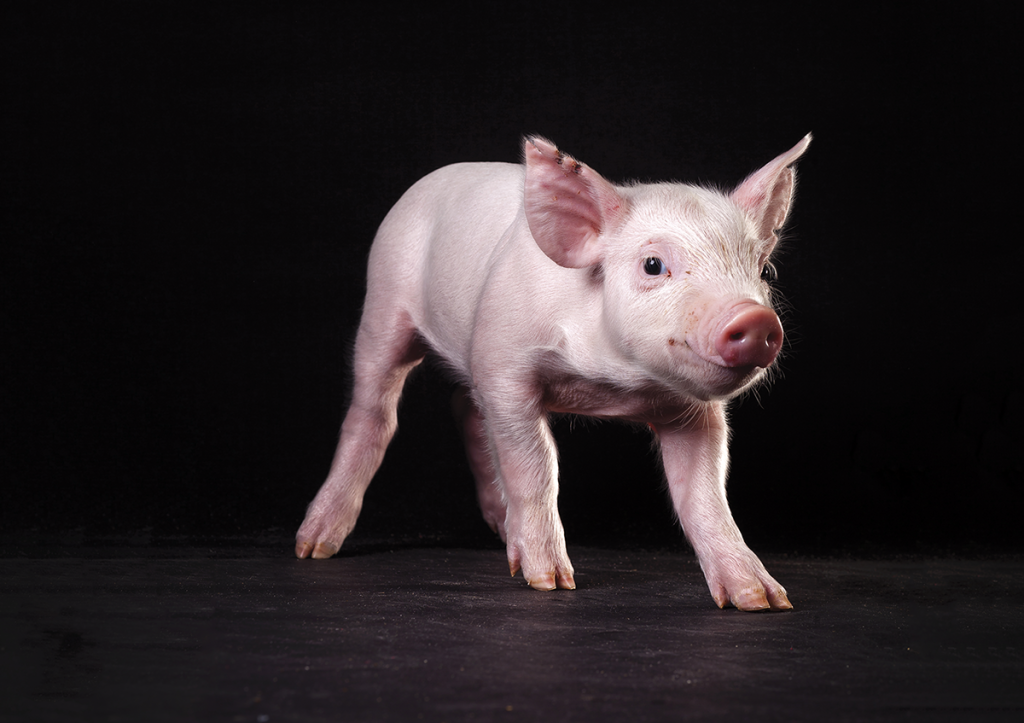
Scientists increasingly turn to pigs in the fight against influenza.
Advances in genetic engineering, immunology, and imaging technologies position the animal as one of the most promising models for developing next generation vaccines and therapies against influenza A virus (IAV).
Writing in Nature Reviews Immunology, a team of international researchers, including Mizzzou, explain the importance of pigs to study infections in controlled conditions, manipulate immune responses and test new treatments before they are used in humans.
“Apart from being similar to people in size, anatomy, and metabolism, pigs develop influenza infections that closely resemble those that occur in humans and spread flu through their breath just like people do,” said John Driver, assistant director at the NextGen Center for Influenza and Emerging Infectious Diseases, Bond Life Sciences Center principal investigator and associate professor of Animal Sciences. “This makes pigs ideal for developing new vaccines and therapies that will block the spread of the virus, which would have a dramatic effect on public health and help the pig industry, which is heavily impacted by flu.”
The threat of a future flu pandemic remains significant. Global population growth, expanding livestock industries, and increased human contact with wildlife have created ideal conditions for new strains of influenza to emerge. In the U.S., the Centers for Disease Control estimate the 2024-2025 flu season caused 51 million flu-related illnesses, 23 million medical visits, 710,000 hospitalizations and 45,000 deaths. It also inflicts major economic losses on agriculture.
Despite decades of research, current vaccines and antiviral drugs offer limited protection. Frequently updated to keep pace with viral mutations, they often fail to prevent transmission.
Pig lung anatomy, immune responses and susceptibility to influenza viruses are remarkably similar to humans. Pigs are natural hosts for IAV and the virus behaves in them much as it does in humans. This makes findings from pig studies more likely to translate into effective human treatments.

Technological advances have significantly enhanced the utility of pigs in research. Scientists can now genetically modify pigs to better understand how specific immune cells or proteins influence infection. Breakthroughs in single-cell analysis are allowing scientists to map the pig immune system in unprecedented detail, revealing similarities between pig and human immune responses.
Mizzou is particularly poised to study the virus thanks to the recent launch of the NextGen Center for Influenza and Emerging Infectious Diseases. It adds to the established expertise of Mizzou’s National Swine Research and Resource Center — funded by the National Institutes of Health — which makes pig models for studying a wide range of human diseases.

“Mizzou has scientists that specialize in making genetically edited pigs that could prove more resistant to infection, and our state-of-the-art facilities are designed to measure the airborne spread of flu between pigs under different environmental conditions,” Driver said. “For scientists like me — who focus on pig immunology for the dual purpose of improving both human and animal health — nowhere else in the world has the same intersection of researchers and facilities committed to studying swine.”
Beyond their role as research models, pigs are also central to the global influenza ecosystem. With an estimated 1.5 billion pigs worldwide, they serve as ‘mixing vessels’ for human, avian, and swine influenza strains. This creates opportunities for viruses to exchange genetic material and form new variants with pandemic potential.
Pigs are already used to study other respiratory diseases, including coronaviruses and cystic fibrosis. Their role in medical research continues to expand, highlighted by recent breakthroughs such as experimental pig-to-human organ transplants.
Driver and his collaborators believe treatments and vaccines that prove effective in pigs are more likely to succeed in humans compared to those developed using traditional small-animal models. To fully unlock this potential, researchers emphasize the need for greater global collaboration. Standardising experimental methods, sharing resources and building international research networks will be essential to accelerate progress.
As the world seeks better ways to prepare for future pandemics, pigs may offer a crucial bridge between laboratory science and long-lasting defenses against influenza.
The paper “Why pigs might help us develop better vaccines and drugs against influenza virus” published in Nature Reviews Immunology on May 29, 2026. It was published as part of an international collaboration between Mizzou, The Pirbright Institute in the UK, the University of Minnesota, the University of Georgia and the UK Health Security Agency.