News
Oct. 6, 2026
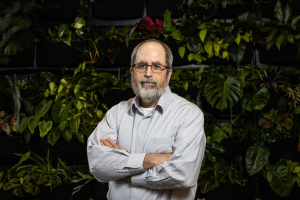
Mizzou scientists learn how plants protect themselves from multiple stressors
By Brian Consiglio | Show Me MizzouPhoto by Abbie Lankitus At the University of Missouri, plant scientist Ron Mittler is rewriting the playbook for how scientists study life by asking what happens when living organisms face multiple stresses at once. For decades, scientists have studied stress by isolating individual factors — exposing a plant to drought, for example, while controlling everything else. That approach has helped researchers understand how organisms respond to specific challenges in a controlled laboratory environment. But nature is rarely that simple. A plant growing in a Missouri field might…
Sep. 27, 2026
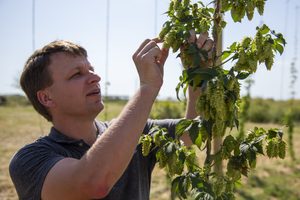
Hops, terpenes and the genetic connection to better beer
Photos and story by Evan Johnson | Bond LSC On a small plot of land at Mizzou’s South Farm, Joe Lynch closely looks at the cone-shaped flowers in his rows of hops plants. The Bond Life Sciences Center principal investigator and plant biochemist recently started exploring how to improve the taste and breeding potential for beer starting at the flavor source. “Because breeding is done with flavor, it’s a lot more art than science,” said the assistant professor in the Division of Plant Science & Technology. “When you drink an IPA, those pronounced flavors that you’re…
Sep. 7, 2026
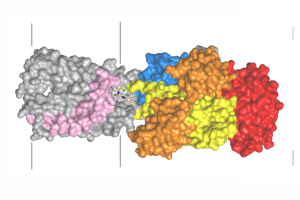
Mizzou researchers unlock a new way to harness copper against disease
By Eric Stann | Show Me MizzouPhoto courtesy of Michael Petris University of Missouri researchers have discovered a new way to harness one of the body’s natural defenses: copper. While copper is essential for life and helps power important biological processes, having too much of it can be toxic. To keep copper levels in balance, cells rely on specialized proteins that regulate where it goes and how much is present. In a new study, the Mizzou team identified the first compound, called MKV3, that blocks a key type of copper transport protein, disrupting…
July 19, 2026
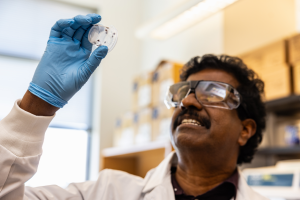
Mizzou innovation speeds up detection of deadly tick-borne disease
By Brian ConsiglioPhoto by Abbie Lankitus A breakthrough at the University of Missouri transforms how Rocky Mountain spotted fever is diagnosed. The new method detects the deadly tick-borne disease in just 40 minutes — a leap that could help patients get lifesaving treatment sooner. Early diagnosis of Rocky Mountain spotted fever is critical. Patients can go from a tick bite to a severe fever, headache and rash within days. Yet existing diagnostic tools can be expensive, hard to access or unable to detect small amounts of the bacteria in a blood sample. Mizzou’s new…
June 1, 2026
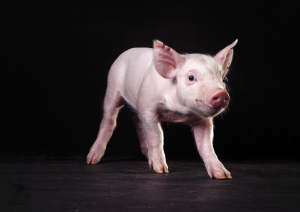
The path to better flu vaccines may go through pigs
Scientists increasingly turn to pigs in the fight against influenza. Advances in genetic engineering, immunology, and imaging technologies position the animal as one of the most promising models for developing next generation vaccines and therapies against influenza A virus (IAV). Writing in Nature Reviews Immunology, a team of international researchers, including Mizzzou, explain the importance of pigs to study infections in controlled conditions, manipulate immune responses and test new treatments before they are used in humans. “Apart from being similar to people in size, anatomy, and metabolism, pigs develop influenza infections that closely resemble those…
May 20, 2026
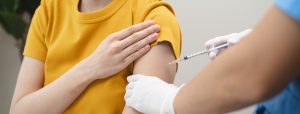
Sleeping your way to better immunity?
Mizzou researchers link poor sleep to weaker immune responses and reduced vaccine effectiveness By Sophie Rentschler | MU Division of Research Poor sleep’s consequences may ripple far beyond feeling tired in the morning; it could also weaken how well vaccines protect you. In a new study, University of Missouri researchers found that chronically fragmented sleep (CSF) reduces both the strength and quality of immune responses, potentially limiting the effectiveness of influenza vaccination. “Many people today struggle to get consistent, high-quality sleep,” said Xiu-Feng (Henry) Wan, senior author and director of the NextGen Center for Influenza and…
April 27, 2026
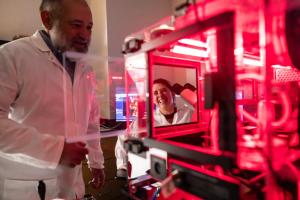
Mizzou advanced technology core facilities drive innovation and discovery
by Brian Consiglio | Show Me MizzouPhotos by Abbie Lankitus At the University of Missouri, breakthrough discoveries are powered by cutting-edge tools, expert support and collaborative spaces. Across campus, Mizzou’s advanced technology core facilities bring shared access to advanced technologies that help researchers quickly move ideas from concept to impact. These spaces allow scientists to tackle pressing challenges, develop better treatments, strengthen agriculture and drive the state’s economy forward. “The cutting-edge instrumentation Mizzou faculty use here elevates their science to a level that is among the best in the country,” said Christian Lorson, associate vice…

March 2, 2026
Seizing an epidemiological opportunity
2026 FIFA World Cup wastewater presents chance for Mizzou professor to track traveling pathogens By Sophie Rentschler | MU Division of Research The structure of the 2026 FIFA World Cup is an epidemiologist’s dream. Five million visitors from across the world will amass to watch or play in the soccer competition, and Marc Johnson sees this clustering of people as pathogen data collection opportunity. Kicking off on June 11, 2026, the World Cup is slated to welcome upwards of 100,000 international visitors to the Kansas City area alone, with 5 million visitors making it to one or…
Feb. 15, 2026
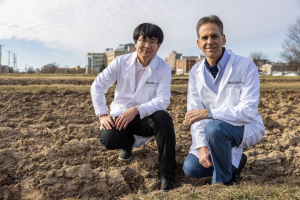
Mizzou researchers uncover how plants regulate root growth
By Brian Consiglio | Show Me MizzouPhoto by Abbie Lankitus “Depending on the environment, plants sometimes need a longer or shorter root, and we discovered that this protein helps regulate that outcome,” Gassmann, director of the Bond Life Sciences Center and a professor in the College of Agriculture, Food and Natural Resources, said. “In times of drought, plants need longer roots to reach deeper into the soil in search of water or nutrients. Now that we have learned what this protein does, we can manipulate it to help plants thrive in various environments.” Into the…
Feb. 1, 2026
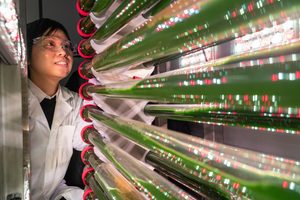
Lab-grown algae removes microplastics from water
By Brian Consiglio | Show Me MizzouPhoto by Abbie Lankitus A University of Missouri researcher is pioneering an innovative solution to remove tiny bits of plastic pollution from our water. Mizzou’s Susie Dai recently applied a revolutionary strain of algae toward capturing and removing harmful microplastics from polluted water. Driven by a mission to improve the world for both wildlife and humans, Dai also aims to repurpose the collected microplastics into safe, bioplastic products such as composite plastic films. “Microplastics are pollutants found almost everywhere in the environment, such as in ponds, lakes, rivers,…
Jan. 25, 2026
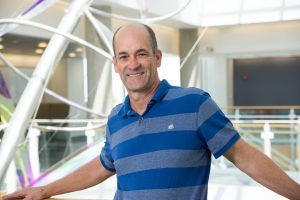
Warren recognized for outstanding achievement by The Academy of Science of St. Louis
Congratulations are in order for Bond LSC’s Wes Warren. He is among honorees of the The Academy of Science — St. Louis for 2026. Receiving the Fellows Award for Outstanding Achievement in Science, the Bond LSC principal investigator and Curators’ Professor of Genomics in the Division of Animal Sciences, Department of Surgery, and the Data Science and Informatics Institute joins six prominent scientists and one collaborative program in receiving accolades. They will be officially recognized at an awards ceremony April 8, 2026, at the Missouri Botanical Garden. Read the full release below. ——-…
Jan. 20, 2026
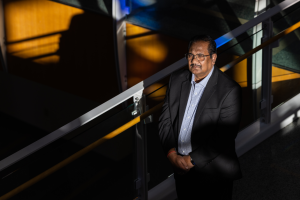
Spotting skin cancer sooner with the help of artificial intelligence
By Brian Consiglio | Show Me MizzouPhoto by Abbie Lankitus What if the earliest signs of skin cancer could be identified sooner — before a dermatology appointment? Researchers at the University of Missouri are exploring how artificial intelligence could help detect melanoma — the most dangerous form of skin cancer — by evaluating images of suspicious skin abnormalities. Designed as a decision-support tool rather than a replacement for medical expertise, the technology could help dermatologists more quickly identify cases that may require closer attention. “The goal is not for AI to replace doctors and…