Published on
Updated on
Photos and story by Evan Johnson | Bond LSC
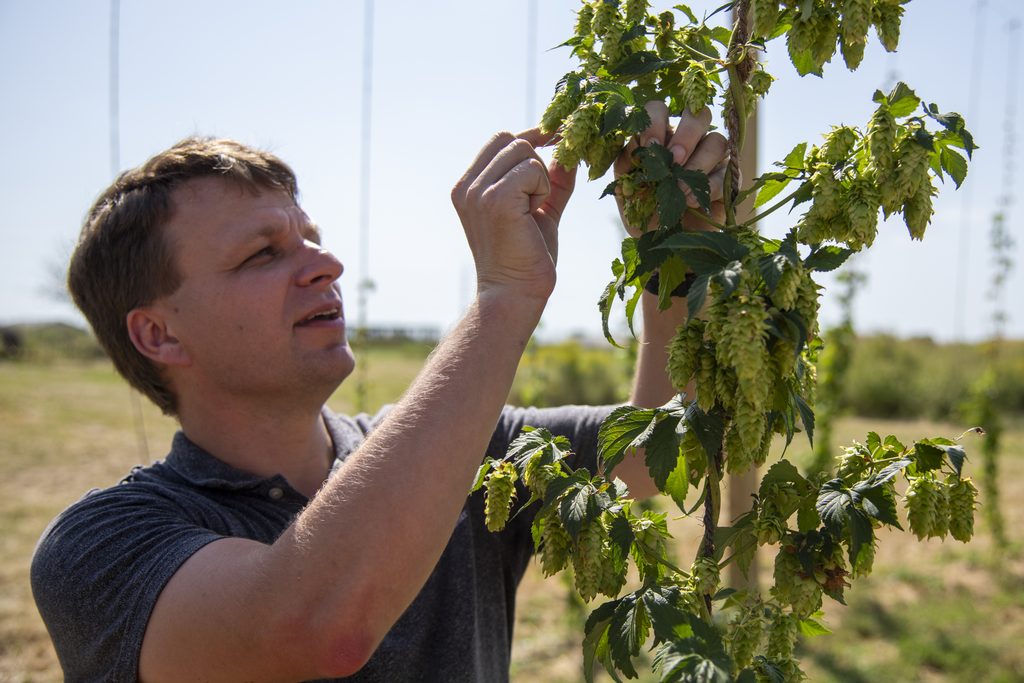
On a small plot of land at Mizzou’s South Farm, Joe Lynch closely looks at the cone-shaped flowers in his rows of hops plants.
The Bond Life Sciences Center principal investigator and plant biochemist recently started exploring how to improve the taste and breeding potential for beer starting at the flavor source.
“Because breeding is done with flavor, it’s a lot more art than science,” said the assistant professor in the Division of Plant Science & Technology. “When you drink an IPA, those pronounced flavors that you’re tasting are directly from those oils in the hops.”
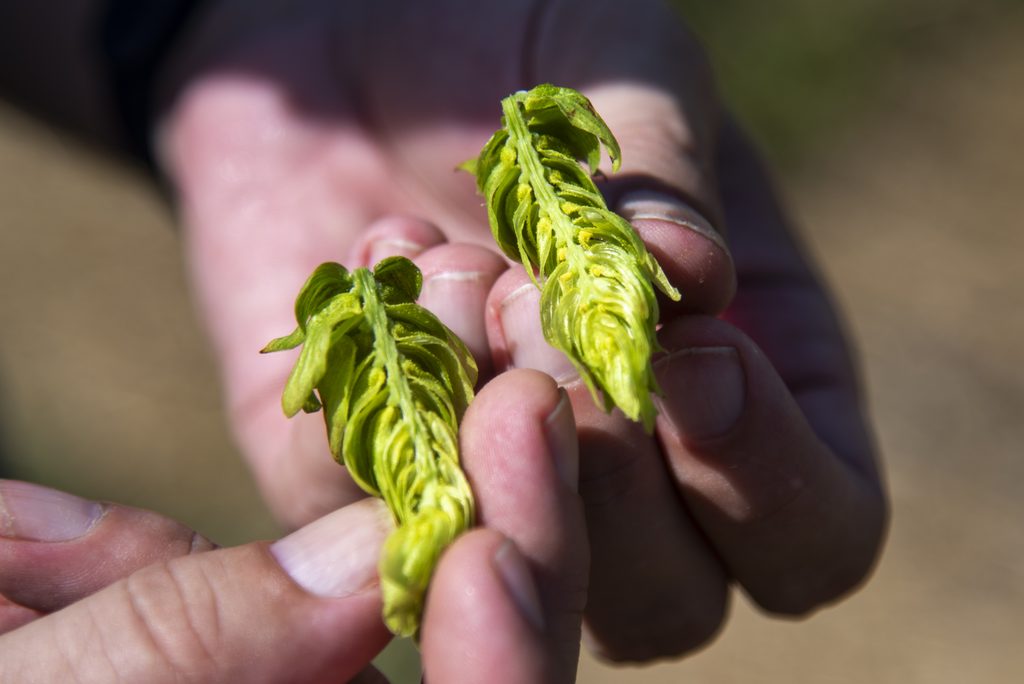
Lynch wants to link genetics of hops to their terpene profiles, which impart its distinct taste. Terpene molecules play roles in various kinds of plant characteristics, not just hops, and aren’t limited to aroma and taste. They can have anti-microbial properties, defend against pests and allow plants to communicate with other plants and insects.
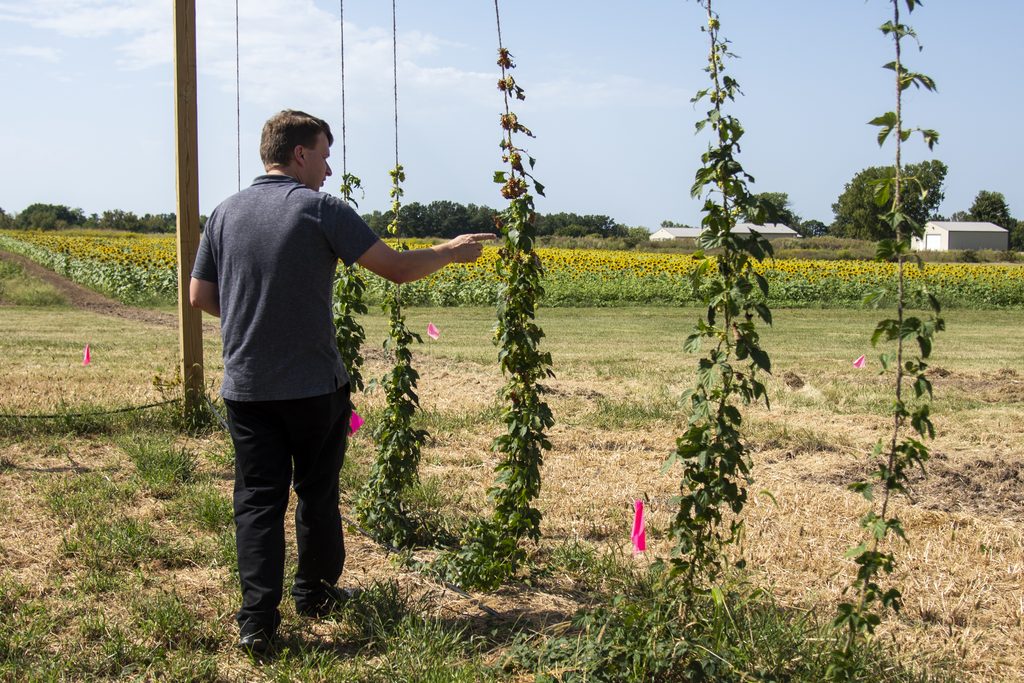
The wide variety of terpenes found in hops inspired Lynch to study them, and he established a plot with 17 species of hops with unique features. A recently awarded Joy of Discovery seed grant from the College of Agriculture, Food and Natural Resources will fund Lynch’s ongoing hops’ work.
“I was surprised at how much opportunity there is in hops because terpenes are absolutely central to the very product itself,” he said. “There’s a lot about the genetics that we don’t understand yet.”
Each hop has a certain character to its terpene profile, providing different taste and aroma. One variety, known as Comet, has a pineapple and mandarin flavor profile. With the data from his research, Lynch enables breeders to determine the viability of crosbred hop varieties by looking at the genes of their seedlings. This would improve breeding programs by allowing growers to determine flavor profiles without waiting for the hop to fully develop.
“As we figure out the details of how these terpenes are made and how they’re controlled at the genetic level, we can apply that to other aspects of terpene metabolism in other species and hopefully get some benefit that way.”