Data-Driven Biology Powered by AI
Dong Xu Lab
Research Interests
Dr. Xu’s lab focuses on the interface between bioinformatics and deep learning. It works on development of novel computational methods, algorithms, software and information systems, as well as on broad applications of these tools and other informatics resources for various biological and medical problems. Several successful applications of deep learning by the lab in bioinformatics span areas such as single-cell data analysis, protein structure prediction, protein language models, protein localization prediction, predicting sites of protein post-translational modifications, elucidating genotype-phenotype associations, understanding biological pathways through image analysis in published literature, and analyzing tongue images for health evaluations.
ABOUT THE LAB
- Single-cell data analysis: Leverage deep learning techniques to develop algorithms and tools for unraveling complex biological patterns and relationships embedded in large-scale, noisy single-cell datasets.
- Protein analysis, prediction, and design: Develop protein language models, predict post-translational modification sites, predict protein localization, and design proteins and peptides.
- AI foundation model applications: Utilize large language and image models to analyze biomedical text and images.
LAB MEMBERS

Research Topics
-
Applied computing
-
Artificial intelligence
-
Crop improvement and agricultural sustainability
-
Data management
-
Deep learning and AI for biological data
-
Drug candidate modeling
-
Genomic tools and systems biology
-
Machine learning
-
Multi-omics and bioinformatics tools
-
Single-cell genomics
-
Software engineering
-
Spatial transcriptomics
-
Applied computing
-
Artificial intelligence
-
Crop improvement and agricultural sustainability
-
Data management
-
Deep learning and AI for biological data
-
Drug candidate modeling
-
Genomic tools and systems biology
-
Machine learning
-
Multi-omics and bioinformatics tools
-
Single-cell genomics
-
Software engineering
-
Spatial transcriptomics
In the news
April 7, 2022
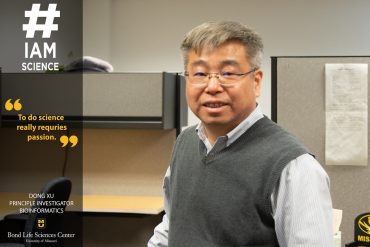
#IAmScience: Dong Xu
Data connects all: ‘Champion collaborator’ Xu bridges research disciplines with bioinformatics By Cara Penquite | Bond LSC Dong Xu extracts wonder from numbers with a keyboard and eager teams of scientists at his fingertips. With his salt-and-pepper hair visible above the cubicle walls and his voice softly but steadily articulated, the beauty of bioinformatics takes shape in his mind although it might not be inherently evident in the rows of computers tucked into a small first floor lab. Xu weaves a multifaceted masterpiece of research methodologies and makes sense of a sea of data from cell…
Sep. 3, 2020
Killing Cancer with Code
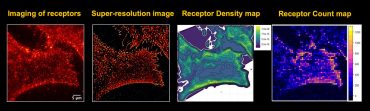
These maps show the receptors’ locations, density and count in a cancer cell. | photo contributed by Alexander Jurkevich, Donald Burke-Agüero, David Porciani and Skyler Kramer. By Lauren Hines | Bond LSC With two laptops in front of him and a supercomputer on the edge of campus, graduate student Skyler Kramer runs through code daily in the Dong Xu lab with a purpose far beyond deciphering lines of data. He helps his colleagues defeat cancer. Working in Bond LSC with senior post doctorate David Porciani from the Donald…
April 15, 2020
Dong Xu receives national honor
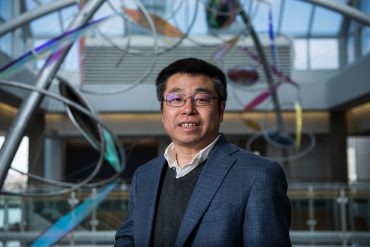
Dong Xu, Bond LSC principal investigator and Shumaker Endowed Professor in the University of Missouri’s College of Engineering. | photo by Roger Meissen, Bond LSC A Bond Life Sciences Center researcher has been inducted into an elite organization comprised of two percent of all medical and biological engineers. The American Institution for Medical and Biological Engineering (AIMBE) this week announced the induction of Dong Xu, a Bond LSC principal investigator and Shumaker Endowed Professor in the University of Missouri’s College of Engineering. “Election to the AIMBE College of Fellows is among the highest professional distinctions accorded to…