Optimizing Plant Resilience
Erin Sparks Lab
Research Interests
Erin Sparks’ research uses interdisciplinary and multi-scale approaches to optimize plant resilience under abiotic and biotic stressors, for example, by applying a unique blend of principles of mechanical engineering and the genetics of root development.
LAB MEMBERS



Research Topics
-
Crop improvement and agricultural sustainability
-
Developmental biomechanics
-
Genomic tools and systems biology
-
Multi-omics and bioinformatics tools
-
Software engineering
-
Crop improvement and agricultural sustainability
-
Developmental biomechanics
-
Genomic tools and systems biology
-
Multi-omics and bioinformatics tools
-
Software engineering
In the news
Oct. 6, 2026
Mizzou scientists learn how plants protect themselves from multiple stressors
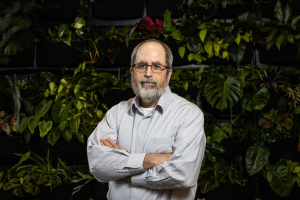
By Brian Consiglio | Show Me MizzouPhoto by Abbie Lankitus At the University of Missouri, plant scientist Ron Mittler is rewriting the playbook for how scientists study life by asking what happens when living organisms face multiple stresses at once. For decades, scientists have studied stress by isolating individual factors — exposing a plant to drought, for example, while controlling everything else. That approach has helped researchers understand how organisms respond to specific challenges in a controlled laboratory environment. But nature is rarely that simple. A plant growing in a Missouri field might…
Sep. 27, 2026
Hops, terpenes and the genetic connection to better beer
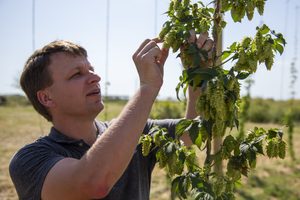
Photos and story by Evan Johnson | Bond LSC On a small plot of land at Mizzou’s South Farm, Joe Lynch closely looks at the cone-shaped flowers in his rows of hops plants. The Bond Life Sciences Center principal investigator and plant biochemist recently started exploring how to improve the taste and breeding potential for beer starting at the flavor source. “Because breeding is done with flavor, it’s a lot more art than science,” said the assistant professor in the Division of Plant Science & Technology. “When you drink an IPA, those pronounced flavors that you’re…
Sep. 7, 2026
Mizzou researchers unlock a new way to harness copper against disease
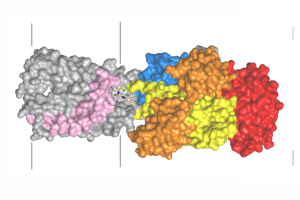
By Eric Stann | Show Me MizzouPhoto courtesy of Michael Petris University of Missouri researchers have discovered a new way to harness one of the body’s natural defenses: copper. While copper is essential for life and helps power important biological processes, having too much of it can be toxic. To keep copper levels in balance, cells rely on specialized proteins that regulate where it goes and how much is present. In a new study, the Mizzou team identified the first compound, called MKV3, that blocks a key type of copper transport protein, disrupting…